Kitchens and bathrooms are the two rooms where bad lighting shows up fastest: shadows on the cutting board, a dim mirror, a fan light that hums. Electrician Federal Way connects you with a licensed local electrician who can add recessed, under cabinet, pendant and vanity lighting, plus exhaust fan lights rated for wet areas. Call (253) 555-0100 to get started.
Both rooms mix water, heat and heavy daily use, so fixture ratings and wiring rules matter more here than anywhere else in the house. Below is a plain guide to layered lighting, what to put where, and the safety ratings to look for.
Layered Lighting: The Plan That Works in Both Rooms
Most kitchens and baths in Federal Way homes built from the 1960s through the 1990s have one ceiling fixture doing all the work. Designers and electricians fix that with 3 layers, each on its own switch or dimmer.
Ambient
General light for the whole room. Usually recessed LEDs or a flush ceiling fixture on a dimmer.
Task
Focused light where you work: under cabinet strips over counters, pendants over an island, vanity lights at the mirror.
Accent
Low light for mood and night use: toe kick strips, in-cabinet lights, or a dimmed shower light.
Kitchen Lighting in Federal Way
Recessed lights over the work zone
Ceiling lights placed in the middle of the room put your own shadow on the counter. Placing recessed LEDs closer to the edge of the counters, roughly over the front edge, lights the work area instead of the floor.
Under cabinet lighting
Under cabinet LEDs are the single biggest upgrade in most kitchens. Hardwired systems run from a wall switch or dimmer with no visible cords, while plug-in kits use an outlet. Mount the strip toward the front of the cabinet so light falls on the counter, not the backsplash glare. A licensed electrician can feed them from an existing lighting circuit, add a driver where needed, and hide the wiring.
Pendants over an island or peninsula
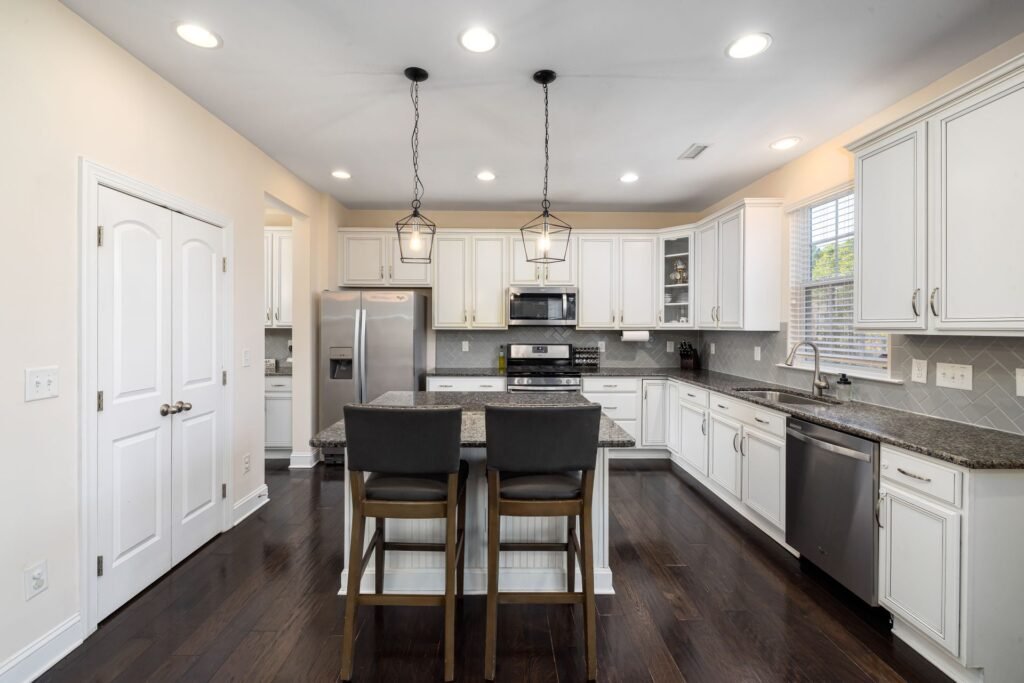
A common guideline is to hang pendants about 30 to 36 inches above the countertop. Each pendant needs a ceiling box in the right spot, so it is easier to plan them before drywall or during a remodel.
Kitchen circuits come first
Kitchen remodels often add appliances too. If you are also moving outlets or adding a range, dishwasher or microwave, your electrician will look at the whole kitchen load. See wiring and upgrades and outlet replacement and GFCI.
Bathroom Lighting
Vanity lighting that lights your face
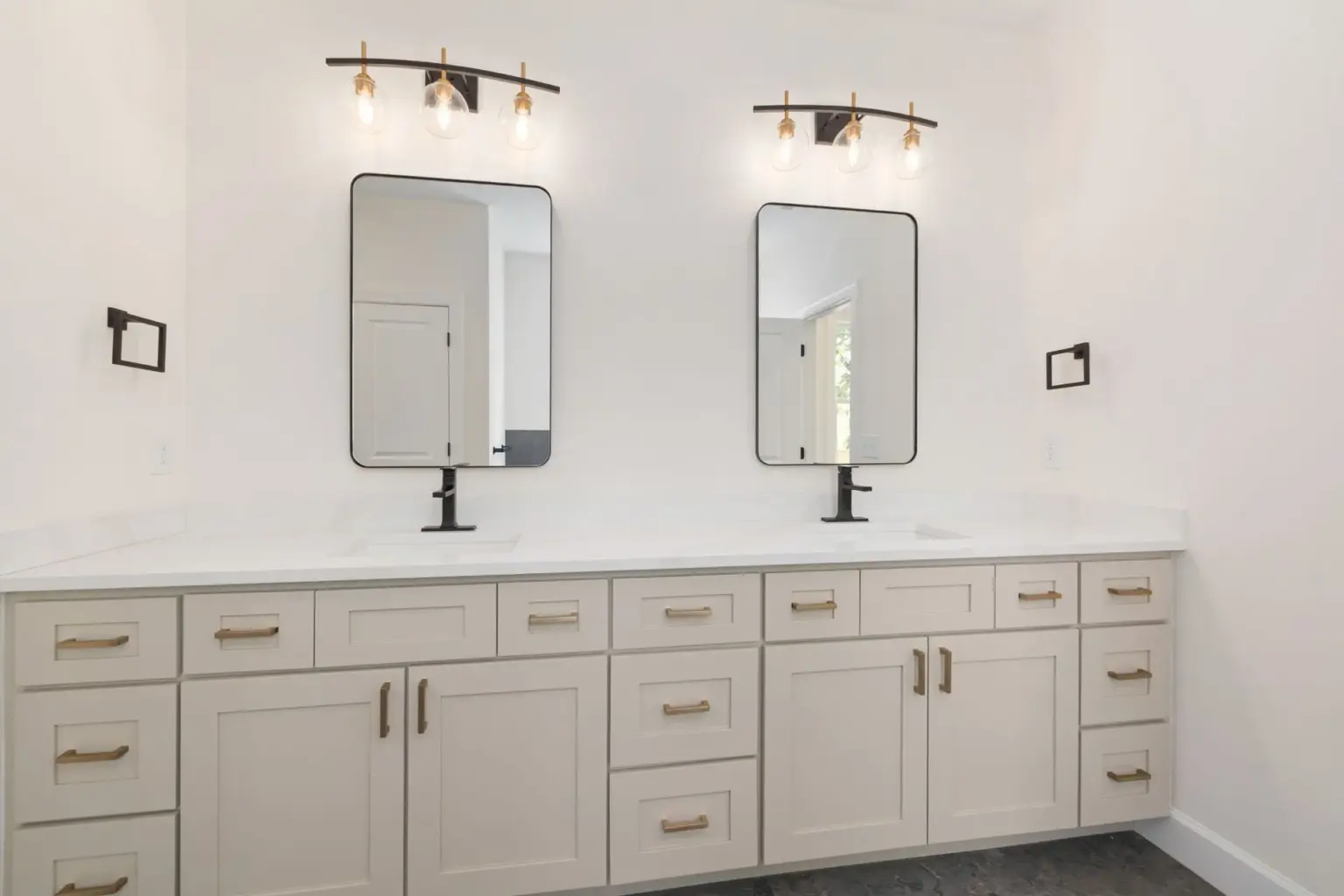
A single recessed light over the sink throws shadows under the eyes. Side sconces at about face height on each side of the mirror, or a bar light above the mirror, give even light for shaving and makeup. Choose 3000K to 3500K with a CRI of 90 or higher so skin tones look true.
Shower and tub lights
A shower light helps a lot in a dark enclosed stall. It must carry the right rating for that spot (see the table below) and use a trim made for wet areas.
Exhaust fans with lights
Combination fan and light units save a ceiling hole and are popular in our damp climate, where long rainy seasons make bathroom moisture and mildew a constant fight. Key points:
- Size the fan to the room. The Home Ventilating Institute guideline is about 1 CFM per square foot for baths up to 100 square feet.
- Duct it to the outside, never into the attic, where moist air causes mold and rot.
- Over a tub or shower, use a fan and light listed for that location, and follow the maker’s instructions on GFCI protection.
- Look for a low sone rating for a quiet fan, and consider a humidity sensor or timer switch so it actually runs long enough.
Damp vs Wet Ratings: Where Each Fixture Can Go
Every fixture carries a UL or similar listing that says where it may be installed. The National Electrical Code also keeps certain fixture types out of the space right around a tub or shower.
| Location | Rating needed | What to know |
|---|---|---|
| Kitchen ceiling, under cabinets | Dry rated is typical | Pick damp rated near a sink if the fixture could get splashed or steamed. |
| General bathroom ceiling and vanity | Damp rated recommended | Steam from showers condenses on fixtures. |
| Over the tub or shower, up to 8 ft above the rim | Damp rated at minimum | Fixtures within the tub or shower footprint must be marked damp or wet. |
| Where shower spray can hit | Wet rated | Common inside walk-in and open showers. |
| Within 3 ft horizontally and 8 ft vertically of the tub rim or shower threshold | No hanging fixtures | Pendants, chandeliers, chain or cord hung fixtures, track and ceiling fans are not allowed in this zone. |
Hanging fixtures inside that 3 ft by 8 ft zone are not allowed by the NEC. Your electrician can suggest a close-to-ceiling wet rated fixture that gives a similar look.
Signs Your Kitchen or Bath Lighting Needs Work
- Rust or water inside a light fixture
- Bathroom fan that hums but does not clear the mirror
- Mildew on the ceiling near the fan
- Under cabinet lights that flicker or go dark in sections
- No GFCI protection near the sink
- Pendant or chandelier hanging close to the tub
How a Kitchen or Bath Lighting Job Goes
Share your plan
Call (253) 555-0100 or use the form. Tell us if this is a remodel or an upgrade in a finished room, and what fixtures you want.
Layout and ratings check
Your electrician marks fixture locations, checks the circuit, confirms ratings for wet and damp spots, and plans switching for each layer.
Permit
Inside Federal Way city limits, the City of Federal Way Permit Center handles electrical permits and inspections. Remodels with new circuits or fixtures commonly need one.
Install and test
Fixtures, drivers, dimmers and fan ducting are installed, GFCI protection is tested, and everything is checked at full and low dim.
Upgrading a kitchen or bath?
Tell us what you want to light. We will connect you with a licensed local electrician in Federal Way.
What Affects the Cost
| Factor | Why it matters |
|---|---|
| Remodel or finished room | Open walls make wiring simple. Finished walls and tile mean more careful fishing and patching. |
| Hardwired vs plug-in under cabinet | Hardwired looks cleaner but needs a feed and switch location. |
| Fan ducting | Running a new duct to the exterior or roof takes more time than swapping a fan on existing duct. |
| Fixture ratings | Wet rated shower lights and listed fan and light combos cost more than basic fixtures. |
| Number of layers and switches | Each layer on its own dimmer adds devices and wiring. |
Electrician Federal Way helps homeowners in Twin Lakes, Redondo, Steel Lake, Lakeland, Mirror Lake and the rest of 98003, 98023 and 98001 find the right electrician. For other rooms, see lighting installation, and for all options visit the lighting services page. Want lights on a schedule or voice control? See smart home installation.
Kitchen and Bathroom Lighting FAQs
Can I put a recessed light in my shower?
Yes, if the fixture is listed for that location. Fixtures within the shower footprint up to 8 feet above the threshold must be marked damp or wet, and any spot hit by shower spray needs a wet rated fixture and trim.
Can I hang a chandelier over my bathtub?
Not within 3 feet horizontally and 8 feet vertically of the tub rim. The NEC bans hanging fixtures, track lighting and ceiling fans in that zone. A wet rated close-to-ceiling fixture is the usual alternative.
What color temperature is best for a kitchen?
Most people like 3000K to 3500K for kitchens. It is bright and clean without feeling cold. Keep under cabinet lights the same color as the ceiling lights.
Should under cabinet lights be hardwired or plug-in?
Hardwired lights look cleaner and run from a wall switch or dimmer. Plug-in kits are simpler but leave cords and use an outlet. During a remodel, hardwired is usually worth it.
How big should my bathroom exhaust fan be?
A common guideline is about 1 CFM per square foot for bathrooms up to 100 square feet. Larger rooms or jetted tubs need more. The fan must vent outside.
How high should pendants hang over an island?
About 30 to 36 inches above the counter is a common guideline. Taller households or larger fixtures may go a little higher.
Do I need a permit for kitchen or bath lighting in Federal Way?
New fixtures, new circuits and remodel wiring commonly need a permit from the City of Federal Way. Call the Permit Center at 253-835-2607 or ask your electrician to confirm for your project.