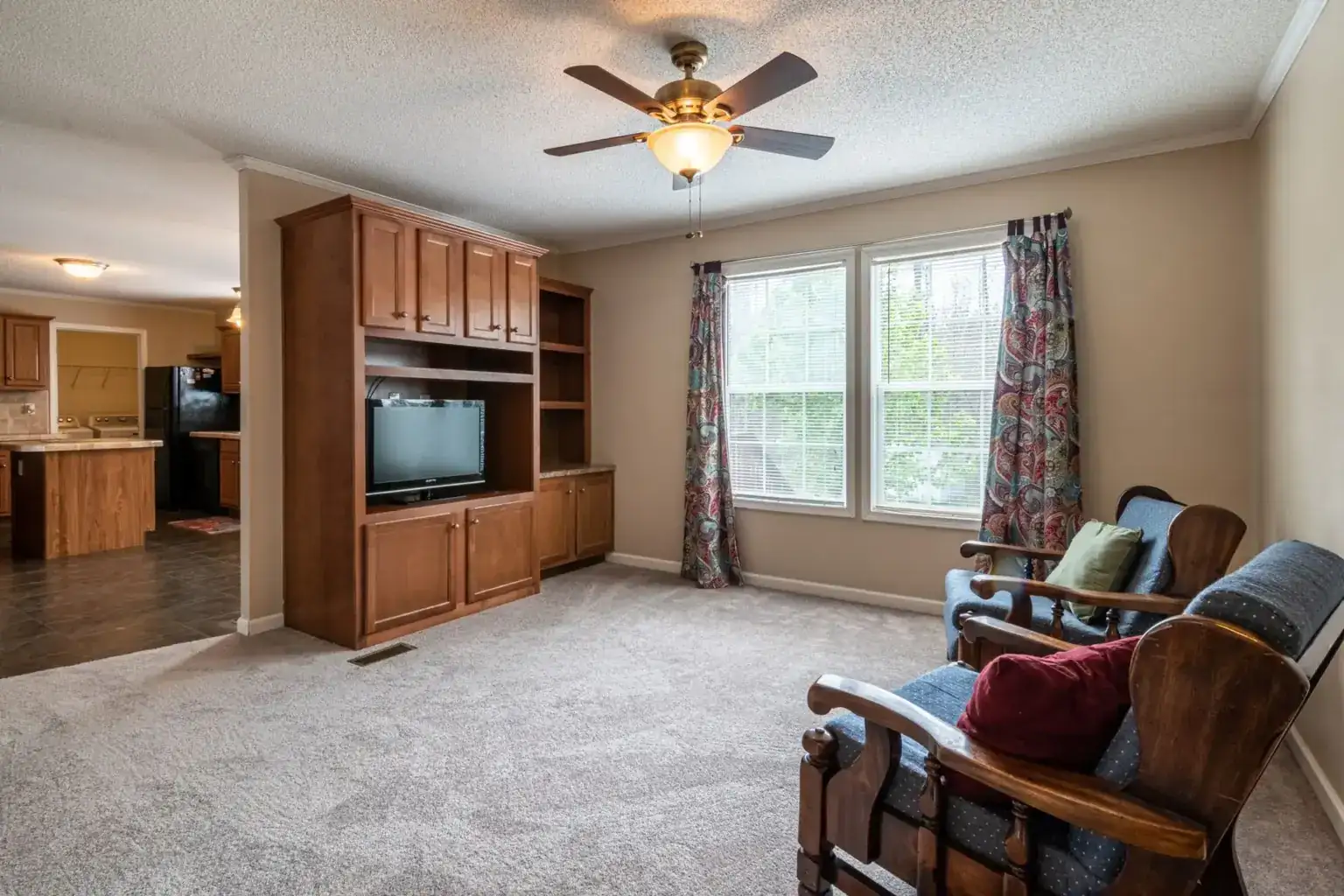
A ceiling fan needs a fan-rated electrical box, the right size for the room, the right height, and a switch setup that makes sense. Electrician Federal Way connects you with a licensed local electrician for ceiling fan installation and replacement in Federal Way, WA, whether you are swapping an old fan, replacing a light with a fan, or adding one where there is no wiring yet. Call (253) 555-0100 to get started.
This page covers the 3 common install types, how to pick the right fan size, what makes a safe mount, and the details that matter in Puget Sound homes, like covered patios and vaulted ceilings.
3 kinds of ceiling fan jobs
The work, and the cost, depend mostly on what is in the ceiling now.
Replace an existing fan
The simplest job. The electrician confirms the box is fan-rated and secure, removes the old fan, and hangs the new one. Good time to add a remote or a wall control.
Replace a light with a fan
Very common. Most light fixture boxes are not rated to hold a fan, so the box is usually swapped for a fan-rated brace box. The existing switch often stays.
New fan, no wiring
A new circuit or cable is run from a nearby source, a fan-rated box is installed, and a new wall switch is added. Attic access makes this much easier.
Why the box matters most
A ceiling fan is heavy and it moves, which puts constant stress on its mount. The National Electrical Code (NEC) requires a fan to be supported by an outlet box or system listed for fan support. A standard plastic light box can loosen, crack, or pull out over time.
- The box should be marked as acceptable for fan support, with the weight it can hold.
- It must be fastened to framing or a listed brace bar between joists.
- Heavier fans may need more support than a standard fan box. Check the fan’s weight.
- Wobble is often a loose mount, not just unbalanced blades.
Picking the right fan size
A fan that is too small will not move enough air. One that is too big can feel drafty and look out of place. ENERGY STAR gives this sizing guide based on room area.
| Room size | Example | Blade span |
|---|---|---|
| Up to 75 sq ft | Small bathroom, walk-in closet, laundry | 29 to 36 inches |
| 76 to 144 sq ft | Small bedroom, home office | 36 to 42 inches |
| 144 to 225 sq ft | Main bedroom, kitchen, dining room | 44 inches |
| 225 to 400 sq ft | Living room, family room, bonus room | 50 to 54 inches |
For very large or open rooms, a bigger fan or 2 fans may work better. Keep blades at least 18 inches from walls and sloped ceilings.
Height, downrods, and vaulted ceilings
ENERGY STAR advises that fan blades sit at least 7 feet above the floor, with 8 to 9 feet giving the best airflow. How you get there depends on your ceiling.
- Low ceilings (under about 8 ft): flush-mount or “hugger” fan
- Standard 8 ft ceilings: short downrod that comes with most fans
- 9 ft and higher: longer downrod to bring the fan down
- Vaulted or sloped: a sloped-ceiling adapter and a downrod long enough to clear the slope
Vaulted and high ceilings are common in split-level and newer homes around Federal Way. They often need a taller ladder or scaffold and more time, so mention the ceiling height when you call.
Planning a new ceiling fan?
Tell us the room and what is in the ceiling now. We will connect you with a licensed electrician in Federal Way.
Controls: pull chain, remote, or wall switch
How you control the fan is worth deciding before the install.
- Single switch: fan and light turn on together, then you use pull chains or a remote.
- Separate switches: needs an extra wire between the switch and fan. Your electrician can tell you if it is there or can be added.
- Wall control or remote kit: many modern fans, especially DC motor fans, come with a remote or a matching wall control. Standard light dimmers should not be used to control fan speed.
- Smart control: some fans connect to apps and voice assistants. See smart home system installation.
Covered patios and damp spaces
Federal Way’s rainy fall and winter and damp marine air are hard on outdoor fans. A fan on a covered porch, patio, or deck should carry the right UL rating.
| Location | Rating to look for |
|---|---|
| Indoor rooms | Dry rated |
| Covered porch, screened patio, bathroom | Damp rated |
| Open pergola, exposed to rain | Wet rated |
Outdoor fan circuits may also need GFCI protection and weather-resistant boxes. For patio and yard lights, see landscape lighting.
How the installation works
Check the ceiling
Your electrician checks the existing box, framing, wiring, and switch, and confirms the fan fits the room and ceiling.
Upgrade the box if needed
A fan-rated box or brace is installed, secured to the framing.
Wire and assemble
The fan is wired to the circuit, grounded, and assembled with the right downrod or flush mount.
Balance and test
Blades are balanced, all speeds, the light, and the remote or wall control are tested.
Permit if needed
A simple swap is often minor work. Running new wiring or a new circuit may need a permit from the City of Federal Way, which handles its own electrical permits and inspections.
What affects the cost
We do not list prices here. These are the factors that change the quote.
| Factor | Why it matters |
|---|---|
| Type of job | Fan swap vs light-to-fan vs new wiring is the biggest difference. |
| Box upgrade | Replacing a light box with a fan-rated brace adds time and parts. |
| Ceiling height | Vaulted and high ceilings need more equipment and time. |
| Attic access | New wiring is easier with an attic above than under a second floor. |
| Controls | Adding a separate switch leg or wall control adds work. |
| Number of fans | Several fans in one visit can be more efficient. |
Using your fan through the seasons
Most fans have a direction switch or remote setting. In summer, run it so air blows down to create a cooling breeze. In winter, reverse it on low so it gently pushes warm air from the ceiling back down, which helps in rooms with high ceilings. A fan cools people, not rooms, so turn it off when you leave.
Electrician Federal Way helps homeowners across 98003, 98023, and 98001, from Twin Lakes and Lakeland to Redondo and Dash Point, find a licensed electrician for fans and fixtures. For other lighting work, see lighting installation and bathroom and kitchen lighting.
Ceiling fan installation FAQs
Can I put a ceiling fan where a light fixture is now?
Usually yes, as long as the box is replaced with a fan-rated box or brace. Most light fixture boxes are not rated to hold a fan’s weight and motion.
How do I know if my ceiling box is fan-rated?
A fan-rated box is marked for fan support and lists a weight limit. If you cannot see a marking, or the box is plastic or loose, have an electrician check it before hanging a fan.
What size ceiling fan do I need?
ENERGY STAR suggests about 36 to 42 inches for rooms up to 144 square feet, 44 inches up to 225 square feet, and 50 to 54 inches for rooms up to 400 square feet.
How high should a ceiling fan be?
Blades should be at least 7 feet above the floor, and 8 to 9 feet gives the best airflow. Use a flush mount on low ceilings and a longer downrod on high or vaulted ones.
Can I have separate switches for the fan and light?
Yes, if there is an extra wire between the switch and the fan, or one can be added. Otherwise a remote or wall control kit can split them.
Do I need a permit to install a ceiling fan in Federal Way?
Replacing a fan or fixture on an existing box is often minor work. Adding new wiring, a new circuit, or a new switch may need an electrical permit from the City of Federal Way. Your electrician will know what applies.
Why is my ceiling fan wobbling?
Common causes are loose blade screws, bent blade holders, unbalanced blades, or a loose mount. If the box or bracket is loose, stop using the fan and have it checked.