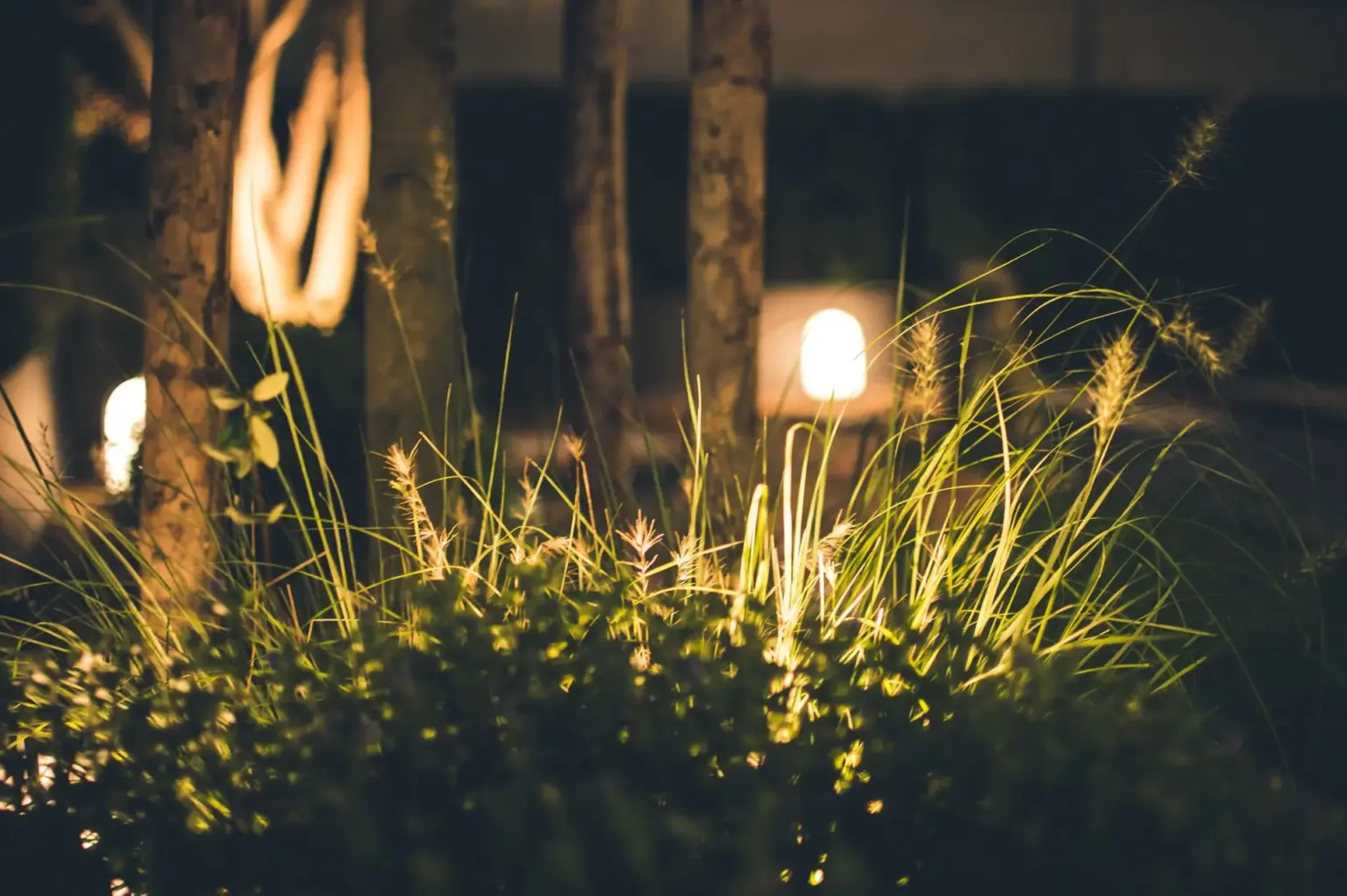
Landscape lighting makes your yard safer to walk, harder for intruders to hide in, and nicer to look at on long Puget Sound evenings. Electrician Federal Way connects you with a licensed local electrician who can add the outdoor outlet or circuit, set up the low voltage transformer, and install path, accent and security lighting built for our wet climate. Call (253) 555-0100 to talk about your yard.
In December the sun sets before 4:30 pm here, so outdoor lights run for many hours a day through the rainy months. That is why fixture material, waterproof connections and good controls matter more in Federal Way than in drier places.
Types of Landscape and Outdoor Lighting
Path and step lights
Low fixtures along walkways, driveways and stairs so family and guests can see where they are stepping.
Uplighting and accent
Spotlights aimed up into trees, rockeries and the front of the house for curb appeal.
Deck and patio lights
Post cap lights, riser lights and under rail strips for decks, plus string light circuits for patios.
Security lighting
Motion sensing floodlights and dusk to dawn fixtures at driveways, side yards, garages and back doors.
Wall and entry lights
Porch lights, garage coach lights and house numbers that are easy to read at night.
Controls
Photocells, astronomical timers, smart transformers and app control so lights follow the season on their own.
Low Voltage vs Line Voltage
Most home landscape lighting today is low voltage LED. A transformer plugs into or is wired to a 120 volt outdoor source and steps power down, usually to about 12 volts, for the fixtures. Line voltage (120 volt) fixtures are still used for security floods, pole lights and wall packs.
| Feature | Low voltage LED (about 12V) | Line voltage (120V) |
|---|---|---|
| Best for | Paths, uplighting, deck and garden accents | Security floods, pole lights, wall fixtures, outdoor outlets |
| Shock risk | Low once past the transformer | Higher, needs full protection |
| Wiring | Direct burial landscape cable, easy to move fixtures later | Wiring methods rated for burial or conduit, buried deeper |
| Permit | The 120V source and transformer connection may need one | Commonly needs an electrical permit and inspection |
| Flexibility | Very flexible, add fixtures as plants grow | Fixed locations |
Transformers, Voltage Drop and Layout
The transformer is the heart of a low voltage system. Getting it right keeps the far lights as bright as the near ones.
- Size it with headroom. Add up the fixture wattage and choose a transformer with room to grow, often loading it to about 80 percent or less.
- Watch voltage drop. Long runs and thin cable dim the last fixtures. Multi-tap transformers, heavier cable, and hub or loop wiring keep voltage even.
- Power it safely. The transformer should connect to a GFCI protected outdoor receptacle with a weatherproof in-use (bubble) cover, or be hardwired by an electrician.
- Automate it. A photocell or astronomical timer follows sunset through the seasons, so you do not reset it every month.
If there is no outdoor outlet where the transformer needs to go, your electrician can add one. See outlet installation and GFCI.
Built for the Wet Pacific Northwest
Federal Way’s mild, damp marine climate is easy on plants and hard on cheap outdoor lighting. Rain, fog and months of wet soil find every weak connection.
- Twist-on or tape splices that corrode in wet soil
- Painted aluminum fixtures that pit and flake
- Lenses fogged with trapped moisture
- Moss and mud burying path lights
- GFCI outlets that trip every heavy rain
- Lights dead after a windstorm knocks branches down
What holds up better: solid brass, copper or composite fixtures, gel-filled or sealed waterproof connectors, fixtures rated for wet locations, and a transformer mounted above the ground where water can’t pool. Plan for a quick yearly check each fall before the rainy season: clear debris, re-aim lights and look for loose cable.
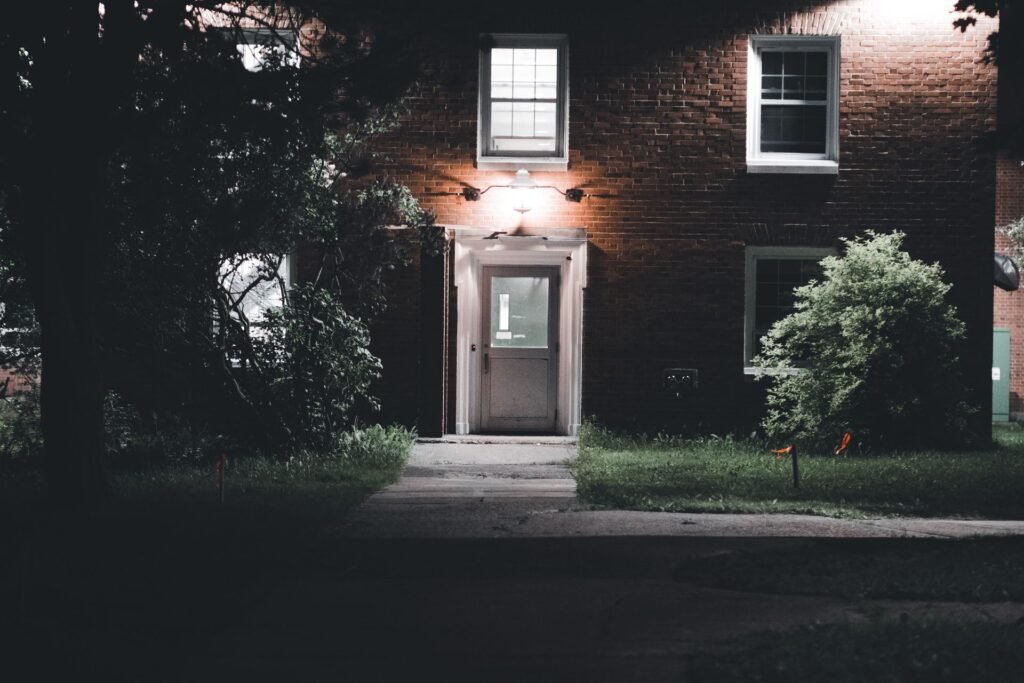
Security Lighting That Doesn’t Blind the Neighbors
Good security lighting removes dark hiding spots near doors, garages, side yards and driveways. Motion floodlights on line voltage give a burst of bright light when someone approaches, while low level path and wall lights keep the yard from looking empty. Pairing lights with a smart doorbell or cameras gives better video at night.
DarkSky International recommends outdoor light that is fully shielded, aimed down, only as bright as needed, warm in color (3000K or lower), and on a timer or sensor. That cuts glare, keeps light out of neighbors’ windows, and still makes your yard safe. Near Dash Point, Redondo and the Puget Sound shoreline, it also keeps the view of the water and night sky.
How a Landscape Lighting Project Goes
Walk the yard
Call (253) 555-0100 or use the form. Tell us what you want to light: paths, trees, house front, deck or security spots.
Night or evening plan
Your electrician picks fixture spots, sizes the transformer, plans cable runs and finds the 120V power source.
Power and permit
If a new outdoor circuit or line voltage lighting is needed, the permit goes through the City of Federal Way Permit Center inside city limits.
Install and aim
Cable is buried, fixtures are set, connections sealed, and lights are aimed after dark for the best look.
Set controls
Photocell, timer or app schedules are set so the system runs on its own.
Ready to light up your yard?
Tell us about your yard and we will connect you with a licensed local electrician in Federal Way.
What Affects the Cost of Landscape Lighting
| Factor | Why it matters |
|---|---|
| Number and type of fixtures | Brass and copper cost more than aluminum but last longer outdoors. |
| Power source | An existing GFCI outdoor outlet is simple. A new circuit from the panel adds work and a permit. |
| Cable runs and terrain | Long runs, slopes, rockeries and hard surfaces to cross take more time. |
| Transformer and controls | Multi-tap, smart and larger transformers cost more. |
| Line voltage security lights | Deeper burial or conduit and inspection add to the job. |
Electrician Federal Way helps homeowners across Twin Lakes, Lakeland, Mirror Lake, Marine Hills and the rest of Federal Way plan outdoor lighting. For indoor projects, see lighting installation, or browse all lighting services.
Landscape Lighting FAQs
Is low voltage landscape lighting safe in the rain?
Yes, when it is installed with wet rated fixtures, sealed connectors and a transformer on a GFCI protected outdoor outlet with an in-use cover. Low voltage on the fixture side also lowers shock risk.
Do I need a permit for landscape lighting in Federal Way?
Plug-in low voltage systems on an existing outlet often do not, but adding an outdoor circuit, outlet or line voltage lights commonly does. Inside city limits, check with the City of Federal Way Permit Center at 253-835-2607 or ask your electrician.
Why are the lights at the end of my run dimmer?
That is voltage drop. Long runs of thin cable lose voltage. Heavier cable, a multi-tap transformer, or hub wiring fixes it.
What color temperature is best outdoors?
Warm white, 2700K to 3000K, looks natural on plants and homes and is the dark sky recommendation. Cooler light can look harsh and adds glare.
Can I add fixtures later?
Yes, if the transformer has spare capacity. That is why electricians often size it with room to grow.
Does outdoor lighting help with security?
Lighting doors, garages and dark side yards removes hiding spots. Motion floodlights plus low level path light work well, especially paired with a doorbell camera.
How do I get started?
Call (253) 555-0100 or use the form. Share what you want to light and whether you have an outdoor outlet, and we will connect you with a licensed local electrician.