Dim offices, buzzing fluorescent tubes, dark parking lots and exit signs that fail their test all cost a business money and create risk. Electrician Federal Way connects property managers and business owners with licensed local electrical contractors for LED retrofits, parking lot and exterior lighting, emergency and exit lighting, and lighting controls. Call (253) 555-0100 to describe your building.
Federal Way has a wide mix of commercial space, from retail along Pacific Highway S (SR 99) and S 320th St near The Commons, to offices, schools, churches, warehouses and business parks near I-5 and SR 18. The lighting needs differ, but the questions are the same: what should be upgraded, what does code require, and what help is available from the utility.
Commercial Lighting Services
LED retrofits
Replacing fluorescent troffers, T8 and T12 tubes, and metal halide or HPS fixtures with LED lamps, retrofit kits or new LED fixtures.
Parking lot and exterior
Pole lights, wall packs, canopy lights and building floods, plus photocells and timers.
Emergency and exit lighting
Exit signs, emergency battery units and egress lighting, including replacement of failed units and batteries.
Lighting controls
Occupancy and vacancy sensors, time switches, daylight dimming and networked controls.
Warehouse and high bay
LED high bays for warehouses, shops and gyms, often with sensors built in.
Tenant improvements
New lighting layouts and circuits when a suite is remodeled for a new tenant. See commercial electrical service.
LED Retrofit Options Compared
Not every LED upgrade is the same. The right path depends on the age of the fixtures, the ballasts, and how long you plan to own or lease the space.
| Option | How it works | Good fit when | Watch for |
|---|---|---|---|
| Plug and play LED tubes (Type A) | Tubes run on the existing fluorescent ballast | Ballasts are fairly new and you want a fast swap | When the ballast fails, the tube goes dark too |
| Ballast bypass tubes (Type B) | Ballast removed, tube wired straight to line voltage | Old ballasts, lower long-term maintenance | Must be wired and labeled correctly, by a qualified electrician |
| Retrofit kits | New LED board and driver installed in the existing fixture housing | Housings are in good shape, ceiling stays intact | Kits must be listed for retrofit use |
| New LED fixtures | Old fixture removed and replaced | Fixtures are yellowed, damaged or you want controls built in | Higher upfront cost, but a clean, like-new result |
Parking Lot and Exterior Lighting
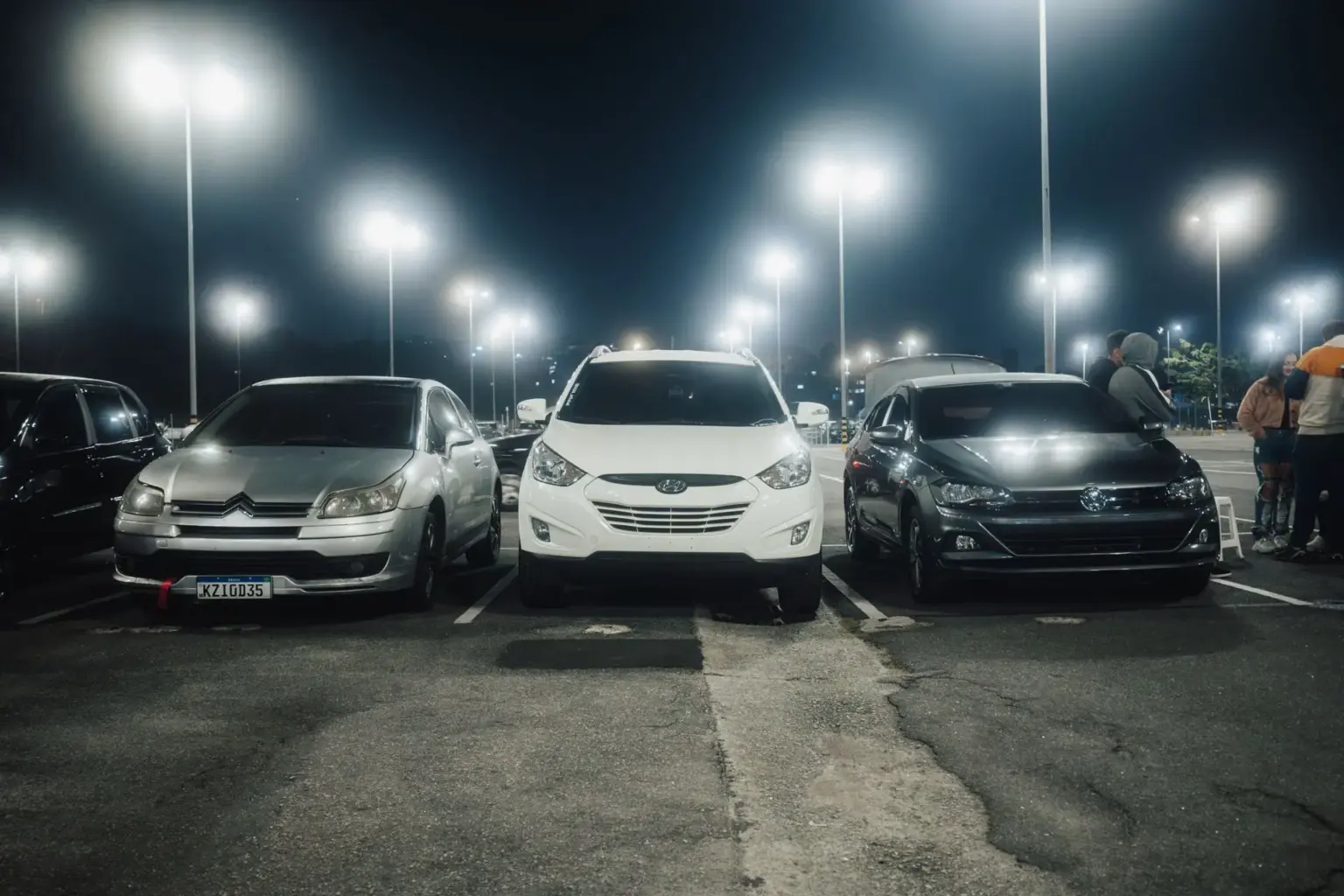
Parking lots, walkways and building entries need even light so customers and staff feel safe after dark, especially through the long, wet winter evenings here. Older metal halide and high pressure sodium fixtures take time to warm up, shift color as they age and use more power than LED.
- LED pole heads and wall packs with full cutoff optics to reduce glare and light spill onto neighbors and streets
- Photocells or astronomical time switches so lights turn off in daylight
- Late night dimming or motion based setback in low traffic areas
- Inspection of pole bases, handholes and underground wiring, which can corrode in our damp climate
- Wet location rated fixtures and weatherproof connections throughout
Emergency and Exit Lighting
Exit signs and emergency lights have to work during a power outage, which in the Puget Sound region often happens during fall and winter windstorms. Batteries wear out, and many buildings only find out during a fire inspection.
- Exit sign letters dim or partly out
- Test button does nothing
- Emergency heads do not stay on for the full test
- Batteries past their service life
- Remodeled spaces with exits that are no longer marked
- Fire inspection notes about egress lighting
NFPA 101, the Life Safety Code, calls for a monthly functional test of battery emergency lights of at least 30 seconds and an annual test of 90 minutes, with written records. Self-testing units can make this easier. Your electrician can replace failed units, add units where exits changed, and connect egress lighting to a generator where the building has one.
Washington Energy Code and Lighting Controls
The commercial provisions of the Washington State Energy Code (WSEC) require automatic lighting controls in most commercial spaces. These include occupant sensors that turn lights off after a space empties, time switch controls, daylight responsive controls near windows and skylights, and exterior lighting controls that shut lights off in daylight and reduce output late at night.
Lighting alterations can trigger some of these requirements, depending on the scope of the project and the code edition in effect. Your electrical contractor and the City of Federal Way Building Division, which handles electrical permits and plan review inside city limits (253-835-2607), can confirm what your project must include.
PSE Business Lighting Incentives
Puget Sound Energy (PSE) is the electric utility for Federal Way. PSE runs a Business Lighting Incentive Program for business electric customers on eligible rate schedules. It covers items such as new LED fixtures, LED lamps replacing fluorescent and HID, and advanced lighting controls, including exterior controls.
PSE states that projects need prior approval and that installation should not start until PSE confirms the grant agreement. Check the current program rules, product requirements and funding on pse.com before you buy fixtures. PSE also offers Lighting to Go instant discounts on some LED products, and a separate program for schools.
Incentive amounts and rules change, so we do not quote numbers here. Ask your electrician whether they have worked with the PSE program and can help with the paperwork.
How a Commercial Lighting Project Goes
Tell us about the building
Call (253) 555-0100 or use the form. Share the building type, square footage, fixture types and any inspection notes.
Lighting audit
The electrical contractor counts fixtures, checks ballasts, circuits and controls, and notes code items like exit signs and sensors.
Proposal and incentive check
You get retrofit options, and if you plan to use PSE incentives, the application is submitted and approved before work starts.
Permit
Inside Federal Way city limits, electrical permits and inspections go through the City of Federal Way.
Install after hours if needed
Many businesses schedule work around opening hours to keep downtime low. Ask about this when you request the proposal.
Commission and document
Sensors and time schedules are set and tested, and you receive records for your files and any incentive claim.
Planning a lighting upgrade?
Tell us about your building and we will connect you with a licensed commercial electrician in Federal Way.
What Affects the Cost
| Factor | Why it matters |
|---|---|
| Fixture count and type | Tube swaps are quicker than full fixture replacement. |
| Ceiling height and access | High bays and pole lights need lifts. |
| Controls | Sensors, daylight dimming and networked systems add parts and programming. |
| Code upgrades | Missing exit signs or required controls may be added to the scope. |
| Work hours | After-hours or weekend work to avoid disruption. |
| Incentives | Utility incentives, when approved, can offset part of the project. |
Electrician Federal Way helps businesses across Federal Way, from City Center to West Campus, find licensed commercial electricians. For interior homes and small offices, see lighting installation. For power issues beyond lighting, see surge protection or browse all lighting services.
Commercial Lighting FAQs
Should I use plug and play LED tubes or ballast bypass tubes?
Plug and play tubes are fast if your ballasts are fairly new. Ballast bypass tubes remove a part that will fail later, but need correct wiring and labeling. With old or mixed ballasts, bypass tubes or new fixtures are usually the better long-term choice.
Does PSE offer rebates for commercial LED lighting?
PSE offers a Business Lighting Incentive Program for eligible business electric customers, plus instant discounts through Lighting to Go. Projects need approval before installation. Check pse.com for current rules and amounts.
Does an LED retrofit have to meet the energy code?
Depending on the scope, lighting alterations can trigger Washington State Energy Code requirements such as occupant sensors or other controls. Your electrical contractor and the city can confirm for your project.
How often should emergency lights be tested?
NFPA 101 calls for a 30 second functional test every month and a 90 minute test every year, with written records. Your local fire marshal may also check these during inspections.
Can parking lot lights be dimmed at night?
Yes. Many LED pole lights support dimming or motion based setback, and the energy code requires certain exterior lighting to reduce output late at night.
Can lighting work be done after business hours?
Many electrical contractors can schedule work around your hours. Ask about this when you request a proposal.
How do I get started?
Call (253) 555-0100 or use the form. Tell us the building type, fixture types and goals, and we will connect you with a licensed local commercial electrician.